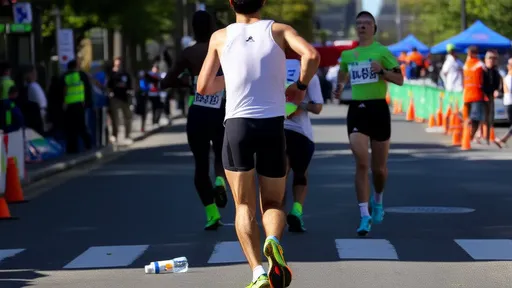
As dawn breaks over the starting line, the air crackles with a unique blend of anticipation and dread. Thousands of runners stretch and pace, their breath forming clouds in the chilly morning air, while behind the scenes, an intricate logistical ballet unfolds with military precision. The modern marathon is far more than a simple footrace—it is a breathtaking collision of human endurance and operational complexity, where every water station, timing mat, and traffic diversion represents a tiny miracle of planning against the relentless tide of physiological limits.
Long before the first runner toes the line, city planners and race directors embark on a journey nearly as arduous as the 26.2-mile course itself. Securing permits for road closures involves negotiating with municipal governments, emergency services, and often skeptical local businesses. The route must be meticulously measured and certified, with every hill, turn, and camber documented. This urban obstacle course must then be transformed into a safe passage for thousands, requiring months of coordination to install barriers, signage, and medical stations while minimizing disruption to the host city.
The sheer scale of participant management presents a monumental challenge. From processing tens of thousands of applications to distributing bib numbers and timing chips, the administrative machinery operates with the complexity of a small government. Corralling athletes into starting corrals alone requires an army of volunteers and sophisticated crowd management techniques. Meanwhile, the expo where runners collect their race packets becomes a temporary city within the city, with its own traffic flow, security concerns, and commercial ecosystem.
Perhaps the most delicate logistical dance occurs around hydration and nutrition. The human body can store approximately enough glycogen for 20 miles of running—hence the infamous "wall" that marathoners hit in the final 10K. To combat this, race organizers must position aid stations with scientific precision, calculating not just the quantity of water and sports drinks needed, but the optimal spacing between stations based on anticipated weather conditions and runner density. The numbers defy belief: major marathons may deploy over 100,000 cups, 60,000 gallons of water, and tons of bananas, energy gels, and other fuels along the course.
Medical preparedness represents the most critical aspect of marathon logistics. The very nature of the event pushes human physiology to its breaking point, creating a perfect storm of potential medical crises. From dehydration and hyponatremia to cardiac events and musculoskeletal injuries, the medical team must be prepared for everything. Advanced medical tents equipped with IV fluids, cardiac monitors, and cooling systems stand ready at multiple points along the course, while mobile medical teams on bicycles weave through the pack, and ambulances stand by with carefully calculated access routes through the closed streets.
The timing and tracking systems alone constitute a minor technological marvel. RFID chips attached to shoes communicate with antennas at various points along the course, feeding real-time data to race officials and allowing friends and family to track runners from anywhere in the world. This constant stream of information enables organizers to monitor the race's progress, identify potential bottlenecks, and even spot runners in distress who might be slowing unexpectedly—a potential sign of impending medical crisis.
Meanwhile, the athletes themselves embark on their own physiological odyssey. The marathon demands near-total depletion of the body's energy stores, pushing systems to their absolute limits. Core temperatures can rise to dangerous levels, muscles consume themselves for fuel, and the brain battles overwhelming signals to stop. The final six miles become a psychological war zone where every step requires conscious effort, where the body's protests must be acknowledged but ignored, where the distance between personal best and complete collapse measures mere seconds.
The environmental factors add another layer of complexity to both planning and performance. Race directors monitor weather forecasts for weeks in advance, preparing contingency plans for extreme heat, cold, or precipitation. On race day, the conditions become an invisible opponent for every runner—heat increasing dehydration rates, humidity impairing cooling through sweat, wind creating additional resistance. The body's response to these conditions becomes part of the race's unfolding narrative, with medical teams adjusting their strategies based on the real-time environmental data.
Behind the scenes, the volunteer corps operates as the beating heart of the operation. From handing out water cups to directing runners at confusing intersections, these thousands of unpaid participants require their own logistical support—training, transportation, scheduling, and nourishment. Their coordination is as crucial as any other element, for a single misstep at an aid station could create a bottleneck affecting thousands of runners, while an incorrectly directed athlete could run extra distance, potentially voiding race results.
The finish line represents not an ending, but another beginning for the logistical team. While exhausted runners collect medals and space blankets, a massive reverse operation swings into action. Medical personnel must handle the sudden influx of finishers, many experiencing dizziness, nausea, or extreme fatigue. The careful dismantling of the infrastructure must begin immediately to reopen city streets, while simultaneously managing the flow of thousands of athletes seeking transportation, family reunions, and medical attention.
In the days that follow, the analysis begins. Race organizers comb through data on finish times, dropout rates, medical interventions, and logistical bottlenecks. Each marathon becomes a living laboratory for the next, with lessons learned applied to future events. The pursuit of the perfect race continues, driven by the knowledge that somewhere out there, a runner's personal triumph depends on the invisible architecture of planning and preparation.
The marathon endures as one of humanity's most powerful metaphors—for struggle, for perseverance, for triumph against impossible odds. But beneath this symbolism lies a breathtaking reality: that such triumphs are made possible only through the marriage of extraordinary human effort and extraordinary human organization. Each finisher's medal represents not just 26.2 miles run, but countless miles of planning, worrying, and problem-solving by an army of dedicated professionals and volunteers. Together, they create the stage upon which ordinary people accomplish the extraordinary, pushing beyond what seems possible, one calculated step at a time.
By /Aug 25, 2025

By /Aug 25, 2025

By /Aug 25, 2025

By /Aug 25, 2025

By /Aug 25, 2025

By /Aug 25, 2025

By /Aug 25, 2025

By /Aug 25, 2025

By /Aug 25, 2025

By /Aug 25, 2025

By /Aug 25, 2025

By /Aug 25, 2025

By /Aug 25, 2025

By /Aug 25, 2025

By /Aug 25, 2025

By /Aug 25, 2025

By /Aug 25, 2025

By /Aug 25, 2025

By /Aug 25, 2025

By /Aug 25, 2025
