In the heart of Austrian baking tradition lies the Apfelstrudel, a pastry that whispers tales of imperial kitchens and rustic farmhouses alike. More than just a dessert, it is a testament to patience, precision, and the transformative power of a simple dough. While the filling of tart apples, cinnamon, raisins, and breadcrumbs is undeniably important, the true soul of the strudel resides in its wrapper—a dough so thin, so ethereally delicate, that it is famously stretched to the point of transparency. This is not merely a step in a recipe; it is a culinary art form, a dance between the baker and the gluten, resulting in a pastry with countless gossamer-thin layers that shatter delicately with each bite.
The journey to creating the perfect strudel dough begins not with flour, but with mindset. This is not a task for haste. The ingredients are deceptively simple: high-protein bread flour, warm water, a touch of oil, and a pinch of salt. Their magic, however, is unlocked not by complexity, but by technique and time. The high-protein content is crucial, as it forms the strong gluten network that will allow the dough to be stretched without tearing. The water must be warm to activate the gluten, and the oil contributes to the dough's elasticity and final tenderness. The mixture is kneaded vigorously, not for a few minutes, but for a solid ten to fifteen, until it becomes incredibly smooth, supple, and passes the infamous "windowpane test." A small piece of dough should be able to be stretched between one's fingers into a thin, translucent membrane without breaking. This is the first sign that the gluten is well-developed and ready for its ultimate trial.
Once kneaded, the dough is not rushed. It is brushed generously with oil, covered, and left to rest. This rest period, often for at least an hour at room temperature or even overnight in the refrigerator, is non-negotiable. It allows the tense gluten strands to relax, making the subsequent stretching possible. To skip this step is to invite a tough, rebellious dough that will snap back like a rubber band and tear under pressure. Patience here is the baker's most important ingredient.
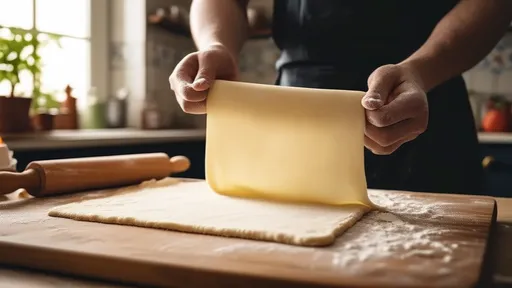
Then comes the main event: the stretching. This process is as much about feel and intuition as it is about technique. The rested dough is placed on a large floured cloth, a traditional strudel cloth or a simple large kitchen towel. The initial shaping is done with a rolling pin, just to flatten it into a rough rectangle or circle and begin the process. But the pin is soon abandoned for the baker's own hands. The goal is to work from the center outwards, using the backs of the hands, gently and patiently. The baker's knuckles, dusted with flour, become the primary tool, carefully easing the dough outward, moving around the table, encouraging it to thin out.
The sensation is unique. One feels the dough yielding, the gluten network expanding into a wider and wider web. It is a process of constant assessment, looking for thicker spots and gently working them out towards the ever-expanding edges. The ideal is a sheet of dough so thin that one can literally read a newspaper or see the pattern of the cloth beneath it. It should be nearly transparent, a fragile, delicate veil. This extreme thinness is the secret to the strudel's signature flaky, layered texture once baked. A thick dough would result in a stodgy, bread-like casing; this transparent sheet will crisp and separate into a thousand delicate shards.
Of course, tears can and do happen, especially for the novice. But all is not lost. The beauty of this elastic dough is its forgiving nature. A small tear near the edge can often be gently pressed back together or patched with a scrap of dough from the thicker border that typically forms around the edge. The filling and the subsequent rolling will seal most minor imperfections. The key is to remain calm, to not force the dough, and to work with a gentle, confident touch. Fear is the enemy; it leads to hesitant, jerky movements that are more likely to cause a catastrophic rip.
Once the dough is stretched to its极限, the filling is arranged along one end. The thick border is trimmed off (and can be used for patching or kneaded into the next batch of dough). Then, using the cloth as an aid, the delicate operation of rolling begins. The cloth is lifted to gently flip the edge of the dough over the filling, and the strudel is rolled onto itself, using the cloth to guide it without touching the fragile dough directly. This method helps create a tight roll without putting stress on the dough. The ends are tucked in, and the finished log is carefully transferred to a baking sheet, often curved into a horseshoe shape to fit.
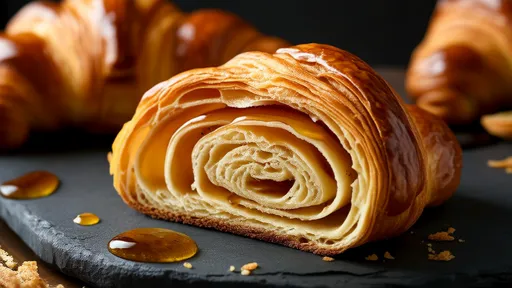
The final act is the bake. The transparent dough, now pale and soft, goes into a hot oven. The heat works its final magic. The water in the dough and the apples turns to steam, pushing the impossibly thin layers apart. The sugars caramelize, and the flour cooks, transforming the delicate, vulnerable sheet into a golden-brown, crisp, and incredibly flaky crust that protects the soft, spiced apple within. The sound of breaking into a freshly baked strudel is the sound of success—a soft, layered crackle.
Mastering the stretch is to connect with centuries of Viennese pastry chefs and home bakers. It is a skill that cannot be fully learned from words alone; it must be felt. It requires practice, a willingness to fail, and the quiet satisfaction of seeing a ball of simple ingredients become a canvas of light and air. In a world of shortcuts and pre-made pastry, the act of stretching strudel dough by hand is a beautiful, deliberate rebellion. It is a reminder that some of the most extraordinary culinary experiences are born from the simplest of processes, executed with care, respect, and a touch of courage. The perfect, transparent stretch is the heart of the Apfelstrudel, the silent, golden secret behind Austria's most beloved pastry.
By /Aug 20, 2025

By /Aug 20, 2025
By /Aug 20, 2025
By /Aug 20, 2025

By /Aug 20, 2025
By /Aug 20, 2025
By /Aug 20, 2025

By /Aug 20, 2025

By /Aug 20, 2025
By /Aug 20, 2025

By /Aug 20, 2025

By /Aug 20, 2025

By /Aug 20, 2025
By /Aug 20, 2025

By /Aug 20, 2025

By /Aug 20, 2025

By /Aug 20, 2025

By /Aug 20, 2025
By /Aug 20, 2025
By /Aug 20, 2025
