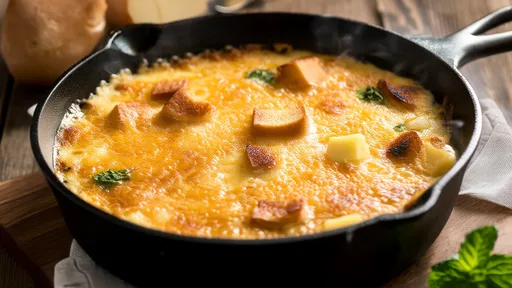
In the world of fondue, where the alchemy of melted cheese transforms a meal into a shared, convivial experience, the choice of fromage is paramount. While many cheeses boast melting capabilities, few achieve the sublime, velvety consistency and profound flavor depth required for the perfect pot. Enter Gruyère, the venerable Swiss cheese from the Fribourg region, a cornerstone of authentic Swiss fondue and a testament to centuries of cheesemaking artistry. Its reputation is not merely built on tradition but on a unique chemical and textural profile that makes it, for many connoisseurs and chefs, the undisputed champion of the caquelon.
The journey of Gruyère begins in the pristine, rolling pastures of western Switzerland, where the specific terroir—a combination of alpine flora, clean air, and traditional farming practices—imparts a distinctive character to the milk. This is not a cheese born from industrial processes; it is a product of AOP (Appellation d'Origine Protégée) regulations that safeguard its methods and origin. The raw cow's milk is gently heated in copper vats, a crucial step that influences the protein structure and ultimately, the melting behavior. The resulting curds are pressed into large wheels and brined before beginning a mandatory aging process of a minimum of five months, though many are aged for far longer, developing increasingly complex notes.
What sets Gruyère apart in the melting pot is its magnificent balance of moisture, fat, and acidity. Unlike some cheeses that become greasy and separate into a pool of oil and stringy proteins, Gruyère melts into a remarkably smooth, homogenous, and stable emulsion. This is largely due to its moderate fat content (approximately 32%) and its specific protein matrix, which retains moisture beautifully without becoming watery. The calcium phosphate content also plays a vital role, helping to keep the proteins dispersed evenly during heating rather than clumping together. This scientific perfection translates to a fondue that is luxuriously creamy, coats the bread impeccably, and maintains its ideal texture from the first dip to the last without seizing up or breaking.
Beyond its technical prowess, Gruyère brings an unparalleled flavor symphony to the table. A young Gruyère, aged around five to eight months, offers nutty, creamy, and slightly fruity notes—a versatile and approachable base. For a more profound fondue experience, a blend incorporating a portion of older, more cave-aged Gruyère (12 months or more) introduces deeper, earthier, and more complex savory characteristics, sometimes with tiny, delightful tyrosine crystals that provide a subtle crunch. This complexity means a fondue made primarily with Gruyère requires minimal embellishment; often just a splash of local white wine, a hint of garlic, and a dash of kirsch are enough to elevate its inherent flavors without masking them.
While other cheeses like Emmental (with its famous holes) or Vacherin are sometimes used in fondue mixes, they often play a supporting role to Gruyère's lead. Emmental, for instance, contributes a lighter, slightly sharper note but can lack the depth of flavor and can sometimes lead to a stringier texture if used alone. Vacherin, when available, is incredibly unctuous but is often too runny to act as the sole foundation. Gruyère provides the structural and flavorful backbone, ensuring the fondue is neither too thin nor too thick, neither bland nor overpowering. It is the golden mean, the culinary equilibrium around which a perfect fondue is built.
The cultural significance of Gruyère in Swiss fondue cannot be overstated. It is interwoven with the very identity of the dish. A traditional moitié-moitié (half-and-half) fondue from its native region combines Gruyère with its cousin, Vacherin Fribourgeois, creating a legendary blend. However, many classic recipes rely solely on a high-quality blend of Gruyères of different ages. To use anything else is often considered a compromise. This is not culinary snobbery but a recognition of a cheese that has been perfected over generations specifically for this purpose. It is the result of an unwritten contract between the cheesemaker, the cook, and the diner, guaranteeing an authentic and unforgettable experience.
For the home cook aspiring to create a truly exceptional fondue, selecting the right Gruyère is the first and most critical step. Look for the AOP designation stamped on the rind, a guarantee of authenticity. If possible, purchase a wedge from a cheese monger who can advise on the age profile rather than a pre-shredded, plastic-wrapped product, which often contains anti-caking agents that can hinder melting. Shredding the cheese yourself just before cooking ensures maximum surface area for even melting. When gently melted with the wine and seasonings over low, indirect heat, the transformation is magical. The cheese will surrender into a silken, glossy pool, a promise of the communal joy to come.
In conclusion, while the world of cheese is vast and wonderful, Gruyère stands alone as the quintessential choice for fondue. Its creation is a blend of art and science, of tradition and terroir, resulting in a product with ideal melting properties and a flavor profile that is both robust and refined. It transforms a simple dish of melted cheese and bread into a culinary event—a warm, rich, and deeply satisfying ritual. For a fondue that is smooth, stable, complex, and authentically Swiss, the choice is clear and uncompromising: Gruyère is, and will likely remain, the perfect cheese for the pot.
By /Aug 20, 2025

By /Aug 20, 2025
By /Aug 20, 2025
By /Aug 20, 2025
By /Aug 20, 2025
By /Aug 20, 2025
By /Aug 20, 2025
By /Aug 20, 2025
By /Aug 20, 2025
By /Aug 20, 2025
By /Aug 20, 2025
By /Aug 20, 2025
By /Aug 20, 2025
By /Aug 20, 2025
By /Aug 20, 2025
By /Aug 20, 2025
By /Aug 20, 2025

By /Aug 20, 2025
By /Aug 20, 2025

By /Aug 20, 2025
