In the heart of Mexican culinary tradition lies a transformative process that turns the familiar green jalapeño into the rich, smoky chipotle. This metamorphosis is not merely a change in flavor but a cultural ritual, a preservation technique born of necessity and perfected over generations. The journey from fresh, bright pepper to deep, complex dried marvel is a story of fire, time, and patience.
The process begins with the selection of the peppers themselves. Not every jalapeño is destined to become a chipotle. Farmers wait for the perfect moment of ripeness, when the pepper has matured to a vibrant red, signaling a higher sugar content that is crucial for the development of its signature smoky-sweet flavor profile. These ripe red jalapeños are then carefully harvested, their skins still taut and glossy, ready to undergo their elemental transformation.
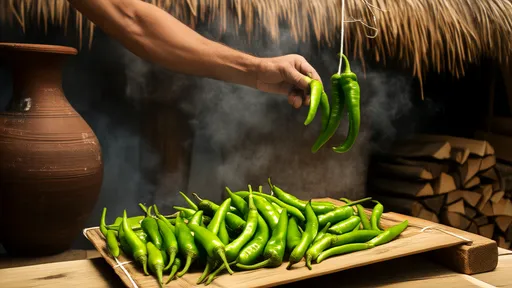
The magic, as it is often called, is wrought by smoke. The traditional method involves a low, slow smoking process over several days. The peppers are spread on racks above smoldering fires, typically fueled by woods like mesquite or oak, which impart a distinct, earthy aroma. This is not a quick roast but a prolonged exposure, a gentle cooking that coaxes out moisture while infusing the flesh with the very essence of the smoke. The heat is kept low and consistent; the goal is dehydration and flavor infusion, not charring.
As the hours turn into days, a profound change occurs. The peppers wilt and darken, their fiery red hue deepening into the characteristic dusty brownish-red of the finished chipotle. Their texture becomes leathery and wrinkled, concentrating their flavors into a potent package. The capsaicin—the compound responsible for their heat—intensifies, but it is mellowed and complicated by the sweet, woody notes from the smoke. The sharp, grassy bite of the fresh jalapeño is entirely remade into something deeper, more resonant, and unmistakably complex.
This technique is a cornerstone of preservation. In an era before refrigeration, smoking was a vital method for extending the shelf life of perishable foods through the leaner months. The process halts spoilage by removing the water that bacteria and mold need to thrive. What began as a practical solution for survival evolved into a cherished culinary art form, gifting the world a ingredient of incredible depth.
The resulting chipotle pepper is a versatile powerhouse in the kitchen. It can be used whole, ground into a powder, or reconstituted in a rich adobo sauce. Its flavor profile is uniquely dualistic: it delivers a steady, building heat that is simultaneously complemented by a sweet, smoky undertone. It adds a foundational warmth to moles, a deep complexity to salsas and marinades, and a smoky kick to stews and beans. It is the soul of many a dish, providing a warmth that feels ancient and comforting.
Beyond its practical and culinary significance, the creation of the chipotle is a testament to human ingenuity in food preservation. It represents a dialogue with the elements, using fire and air to create something entirely new from a simple raw ingredient. It is a practice steeped in history, connecting modern kitchens to ancestral traditions. Each chipotle pepper is not just a spice; it is a preserved story, a capsule of smoke and time, offering a taste of resilience and flavor forged in the embers.
By /Aug 20, 2025
By /Aug 20, 2025
By /Aug 20, 2025
By /Aug 20, 2025
By /Aug 20, 2025
By /Aug 20, 2025
By /Aug 20, 2025
By /Aug 20, 2025
By /Aug 20, 2025
By /Aug 20, 2025
By /Aug 20, 2025
By /Aug 20, 2025
By /Aug 20, 2025
By /Aug 20, 2025
By /Aug 20, 2025
By /Aug 20, 2025
By /Aug 20, 2025
By /Aug 20, 2025
By /Aug 20, 2025
By /Aug 20, 2025
